Average Reviews:

(More customer reviews)The book is OK on general principles-Don't time the market; Study companies; Diversify; Develop your own investment plan, Etc. But I bought the book for specifics of value investing-how to read and evaluate annual reports and financial statements. I was expecting chapters 3 and 4 to be the most helpful of the book. Unfortunately I did not find that to be the case-information on how to evaluate annual reports and financial statements could have been more detailed and complete and there are confusions/errors about some of the key evaluative tools.
Current Ratio: Pages 43 and 53 says a Current Ratio of 2 OR LESS is good. Page 51 says 2 OR MORE! Actually I think it is 2 or more-because there should be no more than $1 of current liabilities for every $2 of current assets.
Quick Ratio: Pages 43 and 54 say a Quick Ratio of 1 OR LESS is good. Page 51 says 1 OR MORE (Appendix A says 1 to 10). Actually I think it is 1 or more-because a company should be able to cover all its current liabilities with current assets less inventory.
Financial formulas can be complicated and there may be no one clear-cut answer for all situations. If so, a discussion should have been included to help readers apply these tools.
Gross Margin: Page 63 shows Walgreen to have a Gross Margin of 94%. It is not clear how a gross profit of 12,655,000 was arrived at-the closest thing I see is a total of costs and deductions on page 59 which is listed on the 10K as "net revenues". While this is most likely a minor glitch, it should have been caught by the author or editor.
Two other criticisms. First, the use of the charts by Bigcharts.com. What do they mean and how should I use them? If charts are included in a text, they should be clearly labeled and there should be an explanation of how to use them.
Second, choice of material on which to base the book. The author based some of the book on interviews (most by telephone) with 5 value investors. Why/how were these interviewees chosen? I think journalists who include interviews should explain the justification for their choice of interviewees. This really should also apply to the books chosen as references-and articles quoted.
Click Here to see more reviews about: How To Be a Value Investor
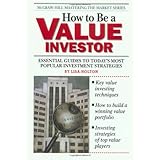
"From the bare basics to tips for the self-made sophisticate, Lisa Holton captures both the art and science of contrarian investing in her book HOW TO BE A VALUE INVESTOR, arming investors with the necessary tools and information they need to make informed investment decisions. Holton not only emphasizes the age-old values of investing--patience, due diligence, and conviction--but also brings a contemporary angle to her approach, making a convincing case for value investing as a wise and lucrative choice."- Eric McKissack, CFA, Vice chairman and co-chief investment officer, Ariel Mutual Funds. HOW TO BE A VALUE INVESTOR is designed to help you master--within hours!--the art and science of value investing. Built on the rock-solid value investing tenets that guided Warren Buffett, Benjamin Graham, and others, this concise but comprehensive wealth-building blueprint gives you practical, hands-on techniques so you can squeeze the most profit from today's volatile markets. Look for these other user-friendly books in The McGraw-Hill Mastering the Market Series:How to Be a Growth Investor;How to Be a Sector Investor;How to Be a Small-Cap Investor.

Click here for more information about How To Be a Value Investor

0 comments:
Post a Comment