Average Reviews:

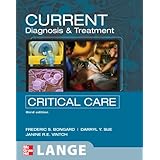
(More customer reviews)This book is a multi-author introductory textbook of critical care medicine directed at students and practitioners of medicine (ie. medical students, medical/surgical interns and residents). It is not directed at ancillary support staff (ie. nurses, techs etc).
It is edited by two experienced intensivists from Harbour-UCLA. Fred Bongard, MD is a trauma surgeon, while Darryl Sue, MD is a physician with a specialty interest in Intensive Care. The editors hope that their respective experience from both medical and surgical perspectives result in a work with a broad, comprehensive assessment of critical care principles and problems.
There are 40 chapters organized according to organ-system. The book is 924 pages long, excluding the (good) index. Most of the authors are from Harbour-UCLA, although there also appears to be many non-academic, private practice intensivists among the contributors.
I felt the coverage was overall very good for an introductory type textbook. Physiologic principles are explained well. Management options are described in some detail. In keeping with the Appleton-Lange series in general, the organization of the chapters is superb, with each subtopic following in logical order.
Some of the particularly commendable characteristics of this book include discussions of "Current Controversies" at the end of most chapters, and special chapters on burns, critical care in pregnancy, organ transplantation, care of elderly patients, transport, and even a special chapter on antithrombotics. Many of these issues are neglected in introductory textbooks.
Some downsides bear mention. The book was completed in the fall of 2002. However, there is a very considerable number of older references - there is nothing wrong with this; in fact, references to classic studies and trials is a good thing and shows a thorough understanding of research developments. However, I would have liked to have seen, in addition to this, references to some newer trials.
There are some inaccuracies and inconsistencies.
In Chapter 11: Shock, in discussing septic shock, no mention at all is made of the recently promulgated SIRS syndrome. This is despite the fact that the chapter was authored by the editor himself (Dr. Bongard)! Dr. Bongard uses the outdated "sepsis syndrome". Just four chapters away, in Chapter 15: Infections in the Critically Ill, the authors of that chapter define SIRS and state: " 'sepsis syndrome' and 'septicemia' should no longer be used."
Another criticism I have is that there is no separate chapter on airway management and mechanical ventilation. I know that the editors have decided to cover these issues in the chapter on respiratory disease, but I feel these central subjects in critical care deserve very detailed explication in chapters of their own.
Overall, a fine introduction to the field.
Click Here to see more reviews about: CURRENT Diagnosis and Treatment Critical Care, Third Edition (LANGE CURRENT Series)
All the management and diagnosis strategies you need in the critical care environment
A Doody's Core Title!
CURRENT Diagnosis & Treatment: Critical Care delivers authoritative and clinically focused guidance in a concise, find-it-now format. Following the trusted LANGE approach, it includes a review of the etiology, relevant pathophysiology, and clinical symptoms as a prelude to diagnosis and treatment. Coverage includes everything from renal failure and surgical infections to coronary heart disease. There is a strong emphasis on evidence-based medicine throughout.
Features:
Comprehensive overview of 39 key critical care topics, covering critical care basics, medical critical care, and the essentials of surgical critical care
Valuable perspectives on the latest technologies, equipment, therapeutic strategies, and interventions
Addresses common but difficult-to-diagnose critical care problems and delivers"approach to the patient" strategies
NEW! Important treatment strategies for venous thromboembolism, acute respiratory distress syndrome, diabetic ketoacidosis, asthma, sepsis, and many more
NEW! Current recommendations for deep vein thrombosis prophylaxis, transfusions, goal-directed therapy in sepsis, mechanical ventilation, use of pulmonary artery catheters, and glycemic control
NEW! PMID numbers on all references for easy look-up
(20081118)
 Get 20% OFF

0 comments:
Post a Comment