Showing posts with label doctor. Show all posts

Sunday, April 8, 2012

Elements of Bioethics Review

Elements of Bioethics
Average Reviews:

(More customer reviews)
My school bag got stolen out of my car and none of my schools book stores had this book. Thank god I found it on Amazon:)

Click Here to see more reviews about: Elements of Bioethics

This book is designed for the biomedical ethics course as a core introduction to biomedical issues in the context of ethical theory. Each chapter unfolds timely, paradigm case examples--many of which have never before been explored in a bioethics text--and presents these topics amidst discussion of their key ethical issues. This short volume complements Pence's popular Classic Cases in Medical Ethics: Accounts of the Cases that have Shaped Medical Ethics, Fourth Edition (ISBN 0-07-282935-4), and Classic Works in Medical Ethics: Core Philosophical Readings (ISBN 0-07-038115-1).

Buy Now

Click here for more information about Elements of Bioethics

Read More...

Friday, September 30, 2011

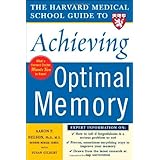
Harvard Medical School Guide to Achieving Optimal Memory (Harvard Medical School Guides) Review

Harvard Medical School Guide to Achieving Optimal Memory (Harvard Medical School Guides)
Average Reviews:

(More customer reviews)
If you are interested in this book, you are probably over 50 and are concerned whether your occasional memory lapses are normal or early symptoms of something serious. This book does an excellent job at fleshing out the difference between the two
However, the author explains there are two schools of thoughts. Some neurologists view memory deterioration on a continuum directly related to age. These view Dementia and Alzheimer's as almost inevitable if we were to live an extremely long life. A supporting statistic is that 47% of individuals 85 years or older do have Alzheimer's. Other neurologists do differentiate between normal aging and disease. They don't view Alzheimer's as inevitable.
The author advances many steps you can take to preserve your memory. Most of those are lifestyle driven to maintain a healthy cardiovascular system (eat fresh produce, avoid saturated and trans fats, take vitamin supplements, do lots of aerobic exercise). Indeed, what is good for the heart is very good for the brain. Brain fitness depends greatly on how well it is irrigated by blood vessels. The author also mentions behavioral steps to preserve memory. Those include becoming an active lifelong learner, remaining engaged in hobbies and community. He also mentions steps to improve your memory including using a PDA to log in daily schedule and using mnemonic techniques to remember grocery lists.
The book also reveals not so well known info. He shares a very long list of prescription drugs that do affect cognitive function. He also indicates that heart surgery, cancer, and cancer treatments can impact memory. He also indicates that vitamins C & E combined are as effective as prescription drugs in lowering the risk and managing early symptoms of Alzheimer's. He also does an excellent job at differentiating inherited risk vs genetic risk. It is not the same thing. You are at greater risk of getting Alzheimer's (AD) if your mother had it only if you also carry the gene Apolipoprotein e4.
Realize that there is much dissidence on the subject. We don't understand a whole lot about the brain. Experts have contradictory but equally well supported opinions. The author suggests that beyond doing all the right things you probably cannot delay onset of AD for long. Leading prescription drugs can manage and defer serious symptoms for just about 6 months to a year. Meanwhile, other specialists (Shankle & Amen authors of "Preventing Alzheimer's") maintain you can defer AD by as much as 6 years if you take care of symptoms early. Additionally, they contrary to this author, state that AD has a strong inherited risk component (this suggests that the inherited risk is correlated to the genetic risk).
Only by reading several books on the subject can you wrap your brain around it. Nevertheless, there is consensus that good living and learning is the best you can do for both your body and your brain. Besides the inevitable intellectual dissonance associated with this subject you still get confirmation of what to do to optimize your brain.


Click Here to see more reviews about: Harvard Medical School Guide to Achieving Optimal Memory (Harvard Medical School Guides)

This is the latest, best information on how to make your memory the best it can be, from a leading doctor in the field. It covers how much lifestyle factors such as sleep, nutrition, and exercise, affect memory, how to tell if you need to see a doctor, and gives proven ways to build your memory power. It is written by a world-renowned authority at Harvard Medical School and Brigham and Women's, consistently ranked as one of the leading hospitals in the U.S. It contains the latest, best, medical practices as well as what we know about alternative approaches, and a recommended lifestyle program. It covers the latest research on topics such as sleep's role in memory, what is "normal" memory as we age, and what to do about "senior moments." It contains boxed items sprinkled throughout, on topics such as "Medical Myths" and "Questions Patients Ask."

Buy NowGet 32% OFF

Click here for more information about Harvard Medical School Guide to Achieving Optimal Memory (Harvard Medical School Guides)

Read More...

Friday, August 26, 2011

What's Wrong with Me? The Frustrated Patient's Guide to Getting an Accurate Diagnosis Review

What's Wrong with Me The Frustrated Patient's Guide to Getting an Accurate Diagnosis
Average Reviews:

(More customer reviews)
The authors, an attorney and a physician, explore the problems millions of patients face in finding definitive diagnoses for ailments that are difficult to pinpoint.

The crux of the book is the eight-step program Dr. Rosenbaum devised to help you define and understand your symptoms. Answering questions in Rosenbaum's eight diagnostic categories will take some thought and perhaps some homework on your part--well worth it, as the answers will provide your own doctor invaluable clues to help him/her diagnose and cure your condition. One very useful chapter tells you how to select the right doctor and make the best use of the time you spend together.
Providing a psychological boost to those who have been told that their mystery malady is "all in your head," (how frustrating is that?) the authors help you deal with the emotional stress and pain that may accompany unnamed conditions. Signficantly, they encourage you to keep on looking for answers. Never give up!
The chapter on children's conditions will be helpful to every parent who has ever been (or will be) faced with a sick child whose exact condition can't be diagnosed even after a battery of tests. This happened to my son and it was a nightmare for the child, for me, and for an entire team of physicians. I wish I'd had this book then, as no one was ever able to give him an accurate diagnosis. (Come to think of it, I'm going to send him a copy of this book, as some symptoms persisted into adulthood.)
Rich with facts, figures, and case histories, the book will intrigue the millions of patients walking around with undiagnosed conditions, their families, and the healthcare providers who work with them. An excellent addition to your health and medical reference books.

Click Here to see more reviews about: What's Wrong with Me The Frustrated Patient's Guide to Getting an Accurate Diagnosis


The Rx for solving your "mystery malady" when your doctors can't

You may feel that your doctor isn't spending the time needed to give you accurate diagnoses--and often you are right. One-third to one-half of all symptoms evaluated by a doctor are medically unexplained. Written by two "mystery malady" patients, What's Wrong with Me? identifies an array of often undiagnosed and misdiagnosed conditions and teaches you how to become your own medical detective.

Inside, you will find:

The authors' revolutionary Self-Diagnosis Model, including the "Eight Steps to Self-Diagnosis" and numerous case studies of medical mysteries that illustrate the model's success
Tips on how to create a partnership with your doctor to get an accurate diagnosis
Advice on how to search for medical clues on the Internet
Techniques for dealing with chronic pain, insomnia, and stress accompanying mysterious maladies


Buy Now

Click here for more information about What's Wrong with Me The Frustrated Patient's Guide to Getting an Accurate Diagnosis

Read More...